
Gentle Relief That Helps Your Pet Feel Like Themselves Again
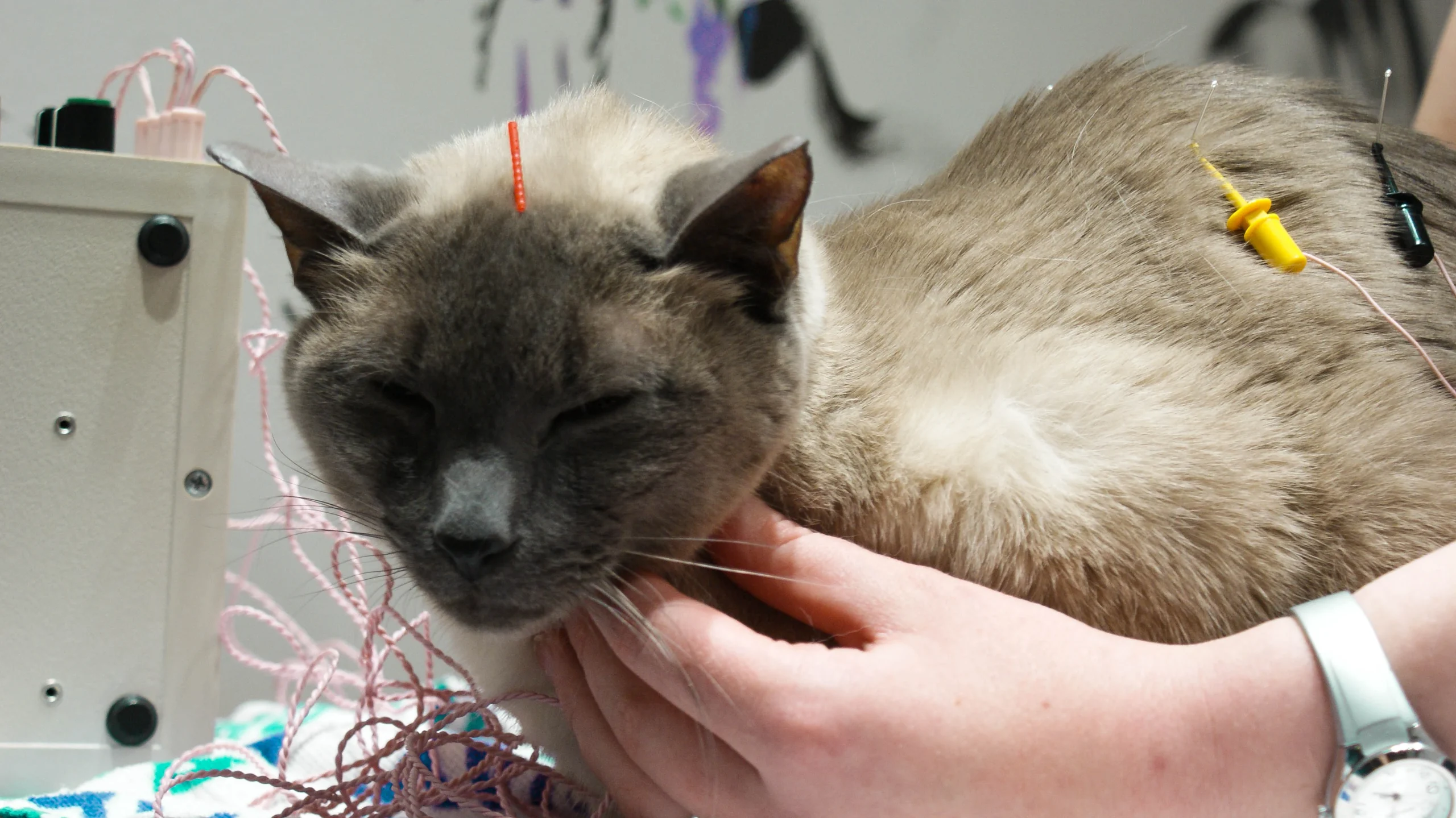 When your dog or cat is stiff, sore, recovering from surgery or living with a chronic illness, acupuncture can help their body heal itself. At The Whole Pet in Bartlett, IL, we use acupuncture for both short-term problems and ongoing conditions. It can be used on its own, or alongside conventional veterinary medicine and other holistic therapies. Most pets relax quickly during a session, and many fall asleep. Owners often notice better comfort, mobility and energy as treatment continues.
What Is Veterinary Acupuncture?
Acupuncture is one of the oldest and best-known forms of treatment. It has been used in animals for more than 3,000 years, first mostly in livestock and large animals. During treatment, very fine, sterile, stainless steel needles are placed at precise points on the body and to specific depths.
Acupuncture affects every major body system. It works mainly through the central nervous system. Its benefits go well beyond pain relief, because it helps to:
- Increase circulation
- Release neurotransmitters and neurohormones, including endorphins
- Relax muscle spasms
- Stimulate nerves
- Support the immune system
Chinese philosophy describes health in terms of Qi, the body’s life energy. Qi flows through a connected network of channels. When it flows smoothly, the body and mind stay nourished and balanced. Many things can disrupt that flow and lead to illness, including stress, poor nutrition, emotional imbalance, trauma, overwork, weather, environmental conditions, genetics and disease pathogens.
In small animal practice, we may use acupuncture as the main treatment for a condition. We may also combine it with conventional and holistic care, or use it as preventive care to keep healthy pets balanced. Every animal can benefit from acupuncture.
How Acupuncture Works
Researchers are still studying exactly how acupuncture works. In simple terms, each needle creates a small, controlled irritation in the tissue. The body answers with a chain of coordinated reactions that stimulate the nervous system. These reactions change blood flow, shift the body’s biochemical responses and affect the immune system. Together, these changes support healing and comfort.
Conditions That Respond to Acupuncture
We use acupuncture for many of the problems we see every day in dogs and cats:
- Musculoskeletal disorders: arthritis, intervertebral disc disease (IVDD), hip dysplasia, back pain and tendon injuries
- Gastrointestinal disorders: diarrhea, constipation, vomiting, reflux, nausea, poor appetite, IBD, rectal prolapse and stomatitis
- Skin disorders: allergies, wound healing, granulomas, hot spots and poor coat quality
- Neurologic disorders: seizures, nerve damage or dysfunction and paralysis
- Respiratory disorders: inflammatory airway disease, asthma and collapsing trachea
- Eye disorders: dry eye (KCS), uveitis, glaucoma, corneal ulcers, allergic eyes and weepy eyes
- Reproductive disorders: difficult birth, retained placenta, breeding problems, vaginal prolapse, urogenital disease, low milk production and mastitis
- Post-operative healing and pain support
- Geriatric support for aging pets
Acupuncture can also complement Western treatment for diabetes, thyroid disease, Cushing’s and Addison’s disease, heart disease and immune-mediated disease. Used with care, it can also support pets going through cancer treatment.
What Happens During a Treatment
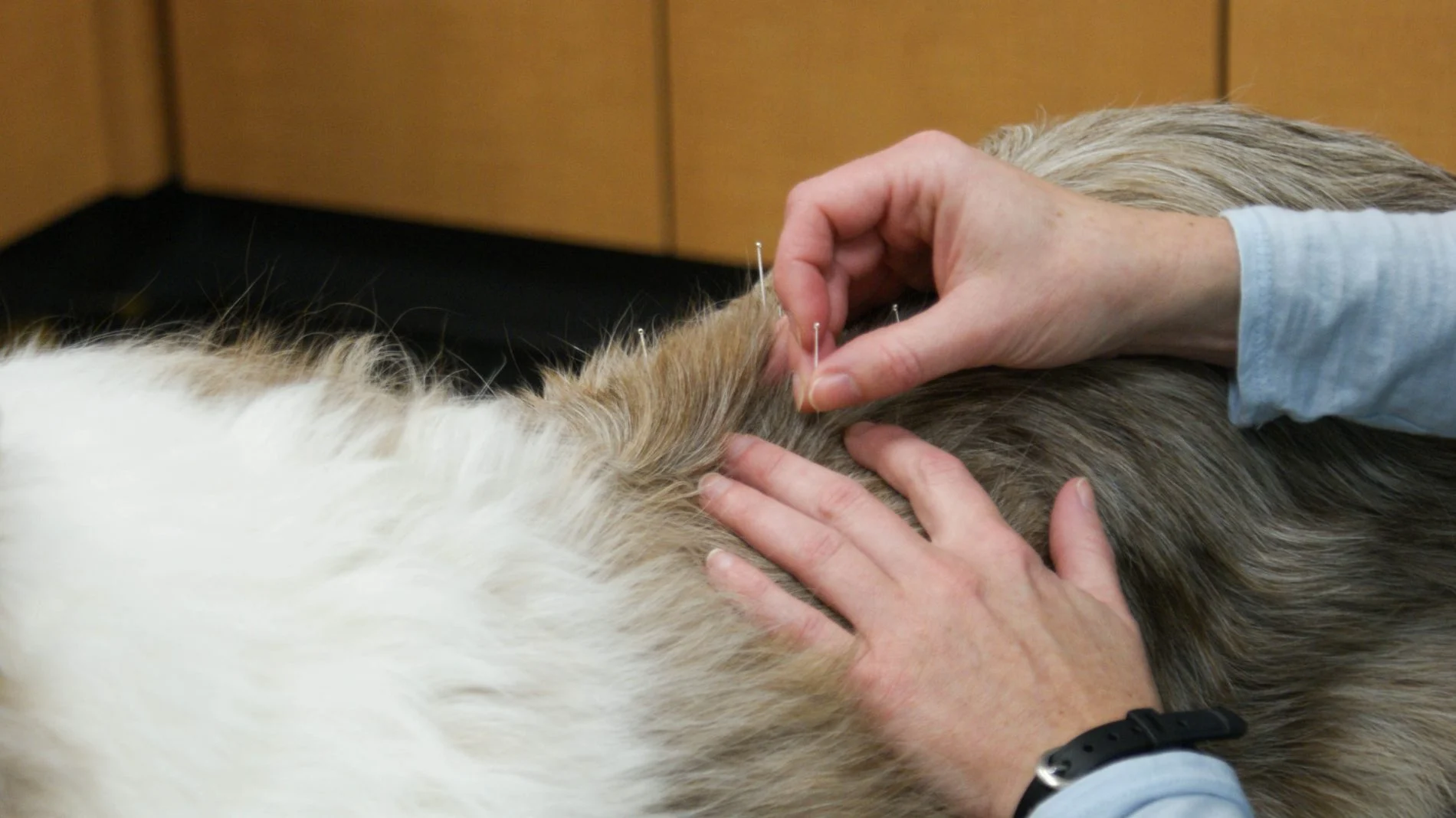 Most sessions last about 20 minutes. Many treatments use only “dry needling.” The number of needles depends on your pet’s condition and the practitioner’s approach. Depending on your pet’s needs, a session may also include:
- Aquapuncture: a small injection of a therapeutic substance, usually vitamin B12, at an acupuncture point
- Electroacupuncture: gentle electrical stimulation of the needles
- Laser acupuncture: stimulation of the points with our Class II or Class IV laser
- Moxibustion: gentle heat applied to the needles
The number of sessions depends on your pet, the condition and how your pet responds. Acute or severe cases may need daily or weekly treatments for several weeks. Once your pet is stable, we space visits out to the fewest sessions that still keep them comfortable. We often pair acupuncture with Chinese herbs and food therapy as part of Traditional Chinese Veterinary Medicine (TCVM).
How We Evaluate Your Pet Through TCVM
Every TCVM evaluation starts with a full Western exam. Next, we take a detailed history. Some of our questions match a conventional visit, and some are unique to Chinese medicine. We may ask:
- How is your pet’s appetite?
- What are your pet’s stools like?
- Is there gas or vomiting?
- Does your pet cough?
- Is your pet thirsty? Do they gulp a lot of water at once or take small sips?
- How is your pet’s energy?
- Does your pet look for warm spots or cool ones?
- Does your pet have trouble falling asleep or staying asleep?
- What is your pet’s overall personality and emotional state?
- If there are symptoms, what time of day or night do they show up?
The TCVM physical exam includes checking the tongue and pulse. We also look at the coat and paw pads, check trigger points and examine any lesions.
The Five Element Personality Types
In TCVM, an animal’s character traits reflect its elemental constitution. The Five Elements are Wood, Fire, Earth, Metal and Water.
- Wood: Natural leaders and alpha types. They like to be in control and around other animals. They can be pushy, and some may need a muzzle. Terriers are a classic Wood type.
- Fire: Joyful, bouncy and full of energy. They love having people around and can get anxious when left alone. Companion breeds are typical Fire types.
- Earth: Easygoing and eager to please. They crave constant companionship and can worry about pleasing others. Labradors are a typical Earth type.
- Metal: Reserved, independent loners. They are capable when called on, prefer rules and routines and get upset by change. Many cats and herding dogs fit the Metal type.
- Water: Fearful animals that hide from strangers, or quiet animals with lots of potential but little drive. “Scaredy cats” and some giant breed dogs are typical Water types.
Organs, Meridians and the Circadian Clock
Each element links to a pair of organs in Chinese Organ and Meridian theory:
- Wood: Liver and Gall Bladder
- Fire: Heart and Small Intestine, plus Pericardium and Triple Heater
- Earth: Spleen and Stomach
- Metal: Lung and Large Intestine
- Water: Kidney and Bladder
Each organ pair reaches its peak energy at a certain time of day or night on the Circadian Clock. Each organ also has a meridian that runs along a set path in cats, dogs, horses and people. Qi travels along these meridians.
Your pet’s history tells us a great deal about which organs may be involved. Clues include the symptoms, when they happen and your pet’s personality type. The TCVM exam then narrows this down. Once we identify the organ system and the problem, we apply the Eight Principles:
- Is it Yin or Yang?
- Is it Interior or Exterior (where is the disease located)?
- Is it a Deficiency or an Excess (how strong is the pathogen)?
- Is it Cold or Hot (what is the nature of the pathogen)?
These answers guide our choice of acupuncture points and shape a treatment plan built for your pet. TCVM is a deep and complex system of medicine, and we look forward to sharing it with you and your pet.
Acupuncture Questions From Pet Owners
Does acupuncture hurt my pet?
Placing acupuncture needles is almost painless. The needles used for dogs and cats are very fine, so most pets tolerate treatment well. Many relax or even fall asleep during a session.
Is acupuncture safe for dogs and cats?
Yes. When it is done by a trained veterinary practitioner, acupuncture is very safe. Side effects and complications are rare. We start every visit with a full exam to make sure acupuncture is a good fit for your pet.
How long does an acupuncture session take?
Most sessions take about 20 minutes. Your first visit will run longer because it includes a full Western exam, a detailed history and a TCVM evaluation.
How many treatments will my pet need?
It depends on your pet, the condition and how your pet responds. Acute or severe problems may need daily or weekly sessions for several weeks. Once your pet is stable, we space treatments out to the fewest visits that keep them comfortable.
Can acupuncture be combined with my pet’s current medications?
Yes. Acupuncture works well alongside conventional veterinary care. We often use it together with medications, surgery recovery, laser therapy, Chinese herbs and food therapy.
What conditions can acupuncture help?
Acupuncture can help with arthritis, IVDD, back pain, digestive problems, skin allergies, seizures, respiratory disease, eye conditions, post-surgical recovery and many age-related problems. It can also support pets with chronic diseases such as diabetes, thyroid disease and heart disease.
Is acupuncture only for older pets?
No. Senior pets benefit a great deal, but acupuncture can help animals of any age. It is used for injuries, recovery after surgery, chronic conditions and preventive care to keep healthy pets in balance.
Help Your Pet Move and Feel Better
If your dog or cat is dealing with pain, a chronic condition or a slow recovery, acupuncture may make a real difference. Call The Whole Pet in Bartlett, IL at (630) 289-2288 or request a visit online. We will build a treatment plan around your pet’s needs.