
Healthy Mouths Mean Healthier, Happier Pets
Periodontal disease is the most common disease in dogs and cats. About 80% of pets have it by age 3. At The Whole Pet in Bartlett, IL, every dental visit is a full Oral Assessment and Treatment Plan. We examine every tooth, take full-mouth X-rays, and take careful precautions with anesthesia so your pet can eat, play and live without hidden mouth pain.
Why Your Pet’s Teeth Matter
Dental disease affects more than the mouth. Bacteria from infected gums and teeth can travel into the bloodstream and reach other parts of the body. Put simply, bad teeth can lead to a sick animal.
Untreated periodontal disease can cause serious systemic (whole body) infections. In advanced cases it can weaken the jaw until it breaks. Some of these fractures can only be treated by removing the infected part of the jaw.
Several things contribute to dental disease in dogs and cats:
- Genetics, which play a large role in how quickly disease develops
- The amount of home care, especially regular tooth brushing
- Diet, which plays a part in oral health
- Trauma from chewing objects that are too hard
- Teeth worn down over time
If you have questions about how food affects your pet’s teeth, our nutritional counseling can help you choose a diet that supports oral and overall health.
More Than a “Dental”: The Oral Assessment and Treatment Plan
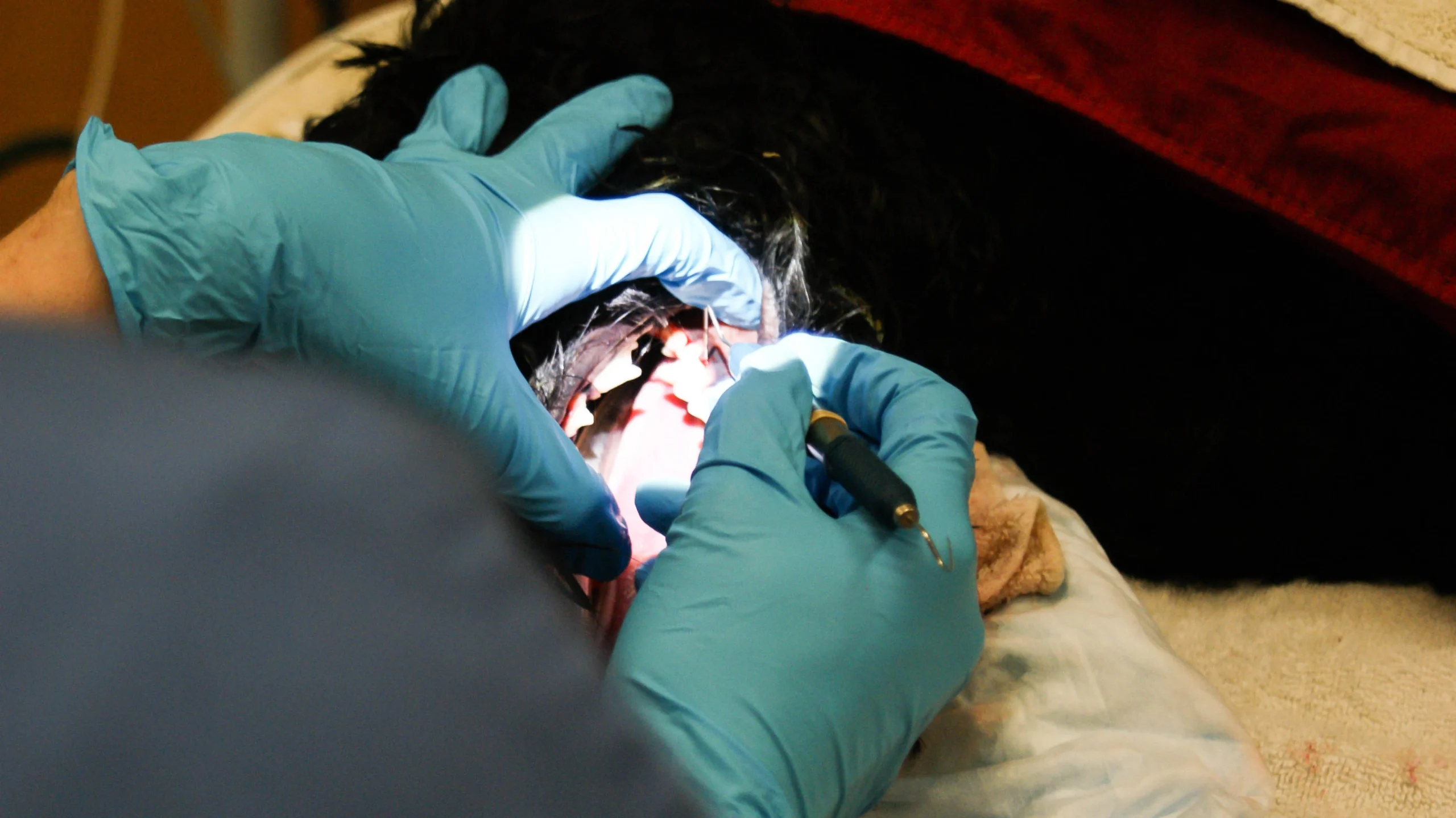
Many people call a pet’s dental procedure a “dental.” When you see your own doctor, though, you don’t get “a medical.” What your pet actually receives is an Oral Assessment and Treatment Plan. It involves much more than cleaning off the tartar you can see.
The Oral Assessment includes:
- Probing every tooth: A technician uses a dental probe to check every surface of every tooth, just as your own dentist does.
- Charting periodontal pockets: We record any significant pockets. These are areas where the gum tissue and surrounding bone have pulled away from the tooth.
- Full-mouth X-rays: Much of dental disease hides below the gum line. Radiographs let us see the roots and bone that can’t be seen from above.
- A doctor’s exam: The veterinarian examines the teeth and the rest of the oral cavity for any unusual lesions.
A true Treatment Plan and cost estimate can only be made once this assessment is complete. A pet’s mouth cannot be fully examined while the pet is awake. That is why an Oral Assessment is the only definitive way to know whether your pet has periodontal disease.
Pets Hide Dental Pain
Many owners assume their pet’s mouth is healthy because they are still eating and drinking. Unfortunately, that isn’t a reliable sign. Every pet has a different pain tolerance. Pets also instinctively keep eating until the pain becomes unbearable. To an animal in pain, the choice is to eat or to starve, so they will eat whatever they can to survive.
Regular wellness exams help us spot early warning signs before disease becomes advanced. Our Pet Wellness Program makes routine preventive care easier to keep up with.
Cleaning, Polishing and Oral Surgery
After the Oral Assessment, we remove tartar from the crowns, which are the visible parts of the teeth. Next, we polish the tooth surfaces and flush around every tooth with an antiseptic solution. If the assessment finds diseased or damaged teeth, the doctor will explain the recommended treatment, including any oral surgery, as part of your pet’s Treatment Plan.
How We Keep Anesthesia as Safe as Possible
None of these steps can be done properly without anesthesia. Fear of anesthesia is the main reason owners put off an Oral Assessment. Anesthesia does carry some risk. However, untreated dental disease is the greater danger. It can shorten your pet’s life and lower their quality of life because of ongoing pain.
At The Whole Pet, we take every precaution to reduce anesthetic risk:
- Blood work before the procedure to confirm your pet is healthy enough for anesthesia
- Pre-medication when needed
- Local anesthesia, gas anesthesia and IV fluids during the procedure
- A warm air blanket to keep body temperature stable
- Constant monitoring of blood pressure, heart rhythm and temperature
- A doctor present with the technician for the entire procedure
Pet Dental Care Questions
How common is dental disease in dogs and cats?
Periodontal disease is the most common disease in pets. About 80% of dogs and cats have some degree of periodontal disease by age 3.
My pet is still eating normally. Could they still have dental disease?
Yes. Pets instinctively keep eating and drinking until the pain becomes unbearable, and each pet tolerates pain differently. A normal appetite does not mean the mouth is healthy. An Oral Assessment is the only definitive way to know.
What is included in an Oral Assessment and Treatment Plan?
A technician probes every surface of every tooth and records any significant periodontal pockets. Full-mouth X-rays are taken to check below the gum line, and the doctor examines the teeth and the rest of the mouth for unusual lesions. Then the tartar is removed, the teeth are polished and the area around each tooth is flushed with an antiseptic solution.
Why does my pet need anesthesia for a dental procedure?
A thorough exam, X-rays, probing and cleaning below the gum line cannot be done safely or completely on an awake pet. Anesthesia lets us evaluate and treat the whole mouth without causing stress or pain.
How do you reduce the risks of anesthesia?
Every pet has blood work beforehand and is pre-medicated if needed. During the procedure your pet receives local and gas anesthesia plus IV fluids, stays warm on a warm air blanket, and has blood pressure, heart rhythm and temperature monitored constantly. A doctor is present with the technician the entire time.
Can dental disease affect the rest of my pet’s body?
Yes. Periodontal disease can let bacteria spread into other parts of the body and cause systemic infections. Severe disease can also weaken the jaw enough to cause fractures.
Why can’t you give me an exact cost before the procedure?
Much of dental disease hides below the gum line and can only be found with probing and full-mouth X-rays under anesthesia. Once the Oral Assessment is complete, the doctor can make an accurate Treatment Plan and cost estimate.
Give Your Pet a Comfortable, Healthy Smile
Bad breath, red gums or tartar buildup can all be signs of dental disease. Don’t wait until your pet stops eating. Call The Whole Pet in Bartlett, IL at (630) 289-2288 or request a visit online to schedule your pet’s Oral Assessment.